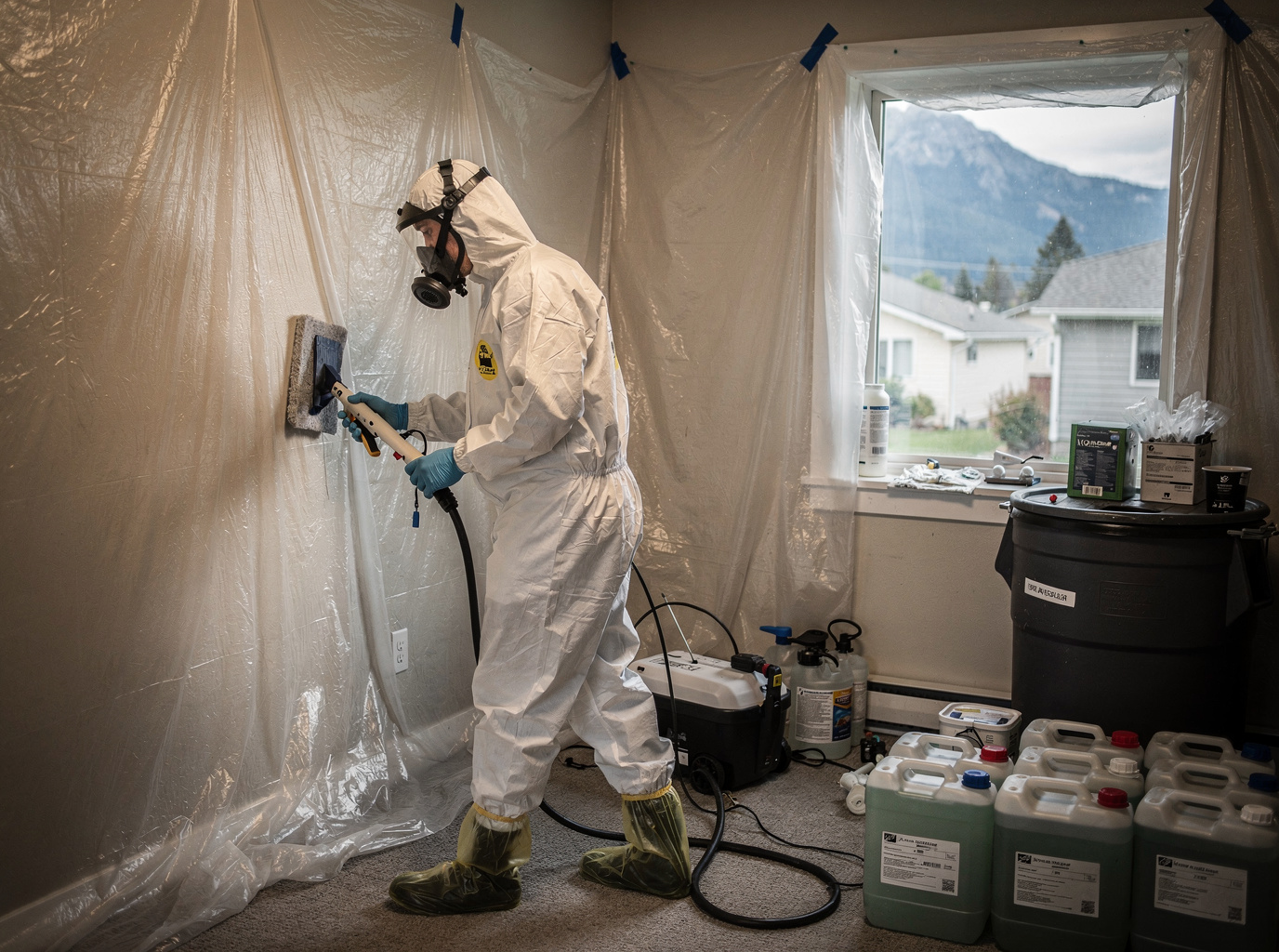
Meth lab residues penetrate porous materials like drywall, carpet padding, and older plaster common in Coeur d'Alene homes built before the 1980s. Crews must remove contaminated layers rather than rely on surface cleaning because methamphetamine and precursor chemicals bind deeply into wood framing and concrete slabs. Properties near Lake Coeur d'Alene often have higher moisture levels in basements and crawl spaces, which can reactivate residues during seasonal humidity shifts.
Ventilation systems in single-family homes throughout the Sanders Beach and Fort Grounds neighborhoods frequently spread contamination to upper floors when meth labs operated in lower levels. Technicians isolate HVAC runs early and test each branch before reuse because cold winters here keep systems sealed for months, trapping particles. Soil around older foundations can hold chemical traces from improper waste dumping, requiring targeted sampling before excavation or landscaping work resumes.
Idaho health department clearance standards demand post-cleanup testing below 0.1 micrograms per 100 square centimeters on all surfaces. Teams document every step with photos and chain-of-custody forms because real estate transactions in Kootenai County now routinely require proof of remediation before closing. Edge cases include attached garages converted into cooking areas where fumes migrate through shared walls into living spaces.
Disposal follows strict hazardous waste transport rules to approved facilities outside the county. Homeowners sometimes attempt DIY neutralization with bleach or other household products, which can create more toxic byproducts and complicate professional follow-up work.
Technician insight
In Coeur d'Alene the thing that catches most people out with Meth Lab Remediation is how older plaster-and-lath walls in homes around Sanders Beach trap residues in hidden cavities, especially after long winters when closed-up houses let chemicals settle deeper into the framing.
Hidden Residue in a Fort Grounds Rental
A landlord discovered signs of past cooking in the basement of a 1970s rental near the lake. Testing showed elevated levels in the HVAC and behind baseboards on the main floor. Crews removed affected drywall and duct sections, cleaned all surfaces, and passed clearance tests so the property could be re-rented without delay.
Meth Lab Remediation Services We Offer
✓Residential Meth Lab Decontamination
Full removal of chemical residues from living spaces, focusing on older Coeur d'Alene homes with plaster walls and crawl spaces where residues accumulate.
✓HVAC and Ductwork Remediation
Isolation, cleaning, and testing of forced-air systems that spread meth particles through homes during cold months when furnaces run continuously.
✓Post-Lab Soil Assessment
Sampling and remediation of contaminated soil around foundations and outbuildings where waste was dumped on properties near the lake.
✓Post-Remediation Clearance Testing
Independent lab verification meeting Idaho standards before owners reoccupy or list homes for sale in Kootenai County.
✓Odor Source Removal and Air Scrubbing
Targeted extraction of embedded smells from porous materials followed by HEPA and activated carbon filtration in sealed rooms.
How it works
- 1
Initial Site Assessment
Technicians inspect the property, identify affected rooms, and note construction details typical of Coeur d'Alene housing stock.
- 2
Containment and Safety Setup
Negative air machines and plastic barriers isolate work zones to prevent cross-contamination to unaffected areas.
- 3
Material Removal and Cleaning
Contaminated drywall, flooring, and fixtures are removed, followed by repeated washing of remaining surfaces with approved agents.
- 4
Clearance Testing and Documentation
Certified samples are collected and sent to a lab; results and disposal records are provided to the property owner.
Pricing
Costs vary by square footage affected, number of rooms, and whether HVAC or soil work is required; upfront written estimates provided after inspection.