2026-09-30 ·
Local Rules for Biohazard Waste Disposal Near Lake Coeur d'Alene
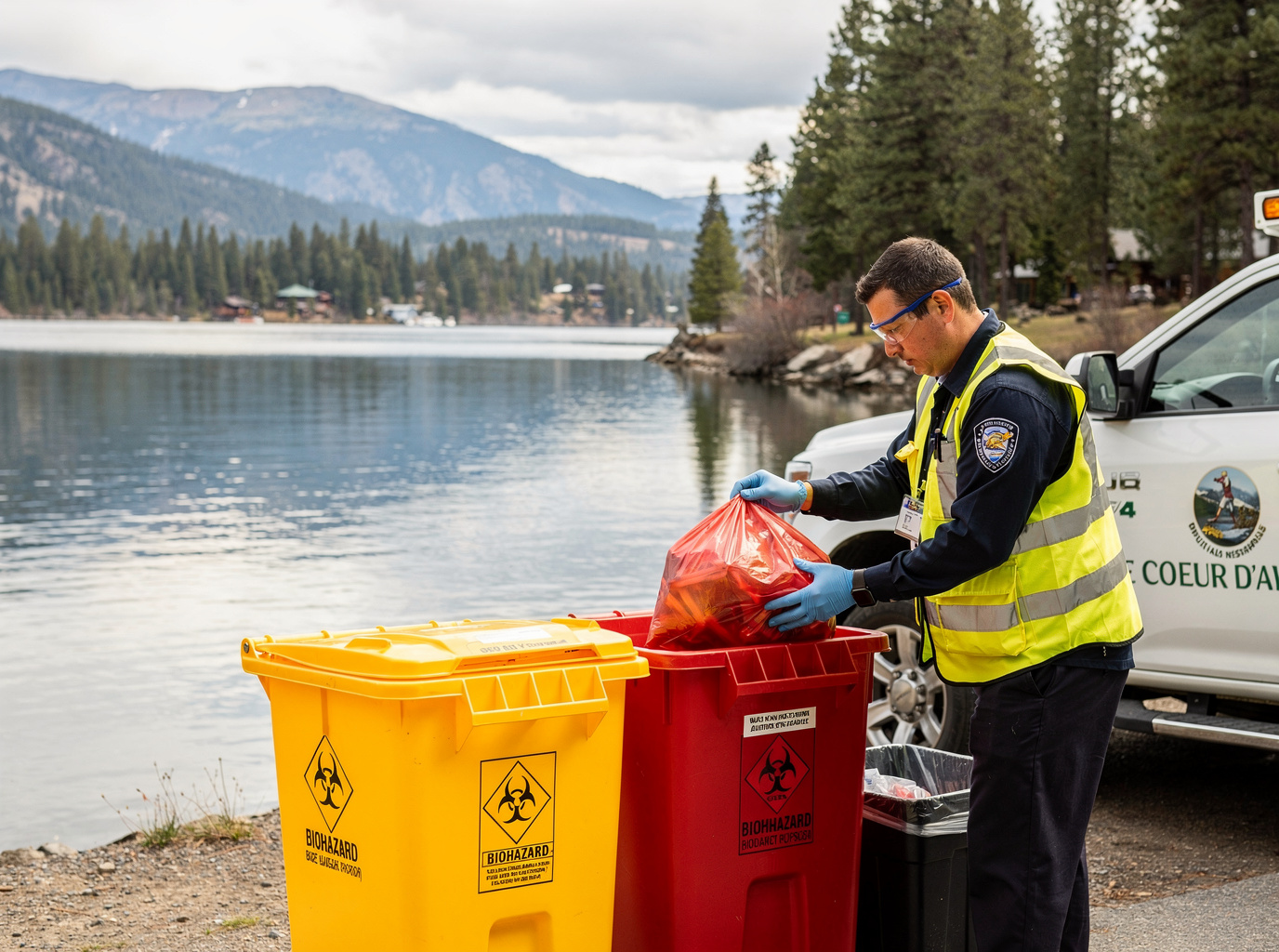
Property owners near Lake Coeur d'Alene must transport biohazard waste only through permitted haulers who deliver it to approved treatment or disposal sites outside Kootenai County. This process begins with double-bagging in labeled containers that meet state leak-proof standards, followed by chain-of-custody forms that track every transfer from the site to the final facility.
Idaho DEQ Transport Requirements
State rules require every load of biohazard material generated in Coeur d'Alene to travel in vehicles equipped with spill containment kits and labeled according to federal categories. Materials from homes in Downtown Coeur d'Alene or Hayden Lake often include blood-soaked items or contaminated personal effects that must be segregated from regular construction debris before leaving the property. Drivers log mileage and time of departure, and any stop within city limits must occur only at pre-approved transfer points. Failure to maintain these records can result in fines issued directly to the generator, even when a contractor handles the physical removal. Local terrain around the lake adds weight restrictions on certain access roads during spring thaw, forcing haulers to schedule heavier loads for drier months.
Kootenai County Documentation Steps
County health officials require a completed manifest that lists the exact address, type of material, and estimated volume before any vehicle leaves a site in Post Falls or Rathdrum. Homeowners receive a copy that must be kept for three years, matching the records retained by the transporter. Properties near Spirit Lake or Dalton Gardens often need an additional county inspection when waste originates from a flooded basement or animal-related incident. The manifest includes contact information for the generator and the receiving facility, which is typically located in Spokane or further west. This paperwork trail protects both the resident and the contractor when questions arise about final disposition.
Handling Waste from Local Properties
Older housing stock in Coeur d'Alene neighborhoods frequently contains plaster and lath that becomes contaminated during an incident, requiring separation from newer drywall before transport. Winter freezes around the lake can solidify some liquids, yet the material must still be thawed and treated as liquid waste upon arrival at the disposal site. Residents in areas such as Downtown Coeur d'Alene often face limited driveway access, so crews stage containers on the street and load them under direct observation to prevent public contact. The same process applies after flooding events detailed in Biohazard Cleanup Following Home Flooding in North Idaho, where saturated insulation and carpet must be double-contained before leaving the county.
Coordination with Medical Waste Facilities
Approved facilities outside the region accept only waste accompanied by the proper state form and proof of origin within Kootenai County. Materials collected during medical waste disposal jobs follow the same route and documentation as crime scene debris, though volumes tend to be smaller. Crews working near the lake coordinate pickup times with the facility to avoid holding waste overnight in residential areas. Seasonal road conditions between Coeur d'Alene and the nearest treatment plant can extend transit times by several hours, so schedules account for weather before departure. This coordination ensures compliance while minimizing the time any container remains on site.
Winter and Seasonal Considerations
Frozen ground around Hayden Lake and Post Falls changes how crews contain and move waste during colder months, as described in Handling Rodent-Related Biohazards During Coeur d'Alene Winters. Ice can crack standard bags, so reinforced liners become necessary. Shorter daylight hours also limit the window for loading and transport, requiring earlier dispatch calls. Property owners should request service before temperatures drop below freezing to avoid additional containment steps. These seasonal adjustments keep the material stable from the moment it leaves the property until it reaches the final disposal location.