2026-09-30 ·
Biohazard Cleanup Following Home Flooding in North Idaho
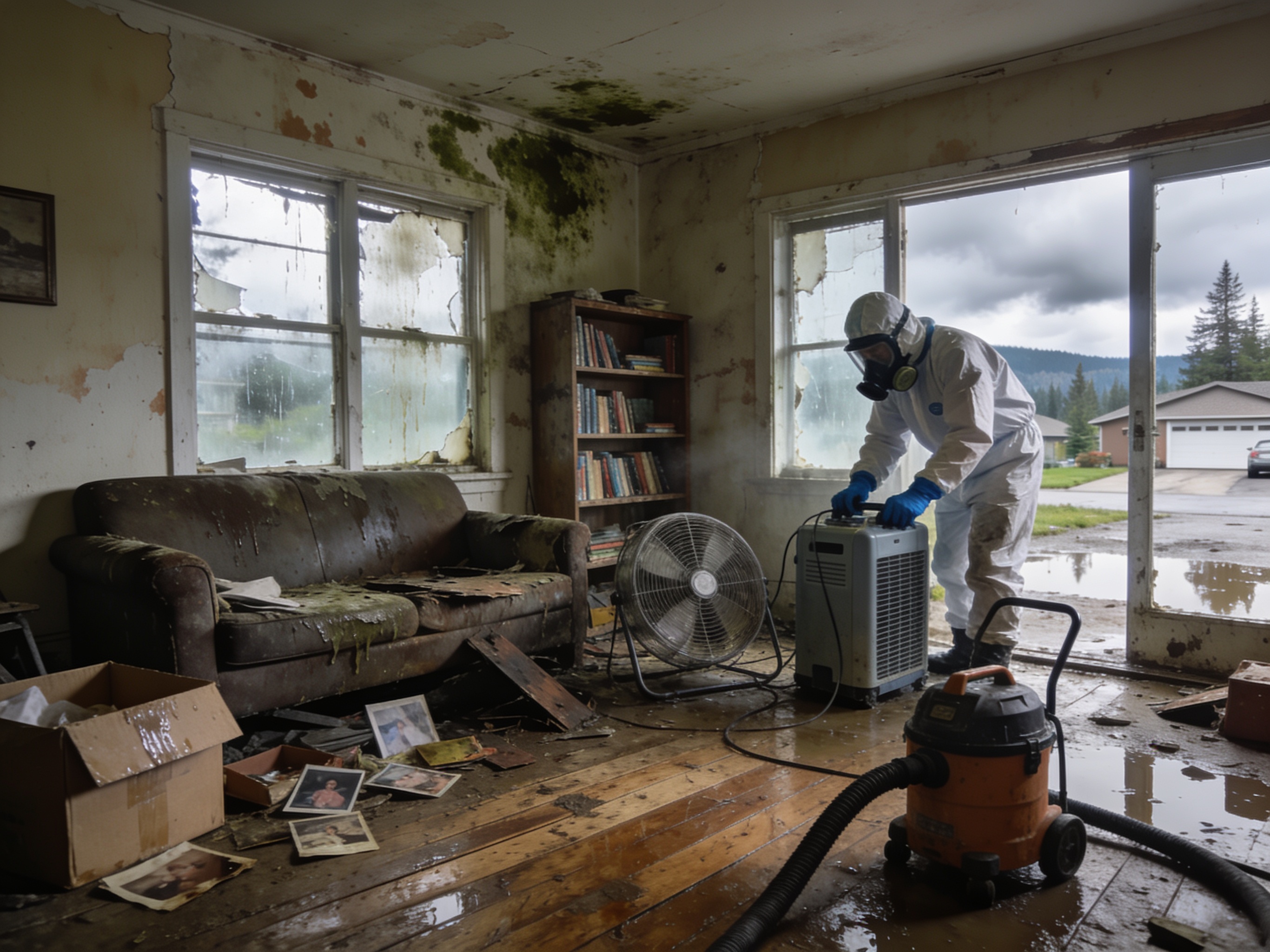
Biohazard cleanup following home flooding in North Idaho centers on removing sewage, bacteria, and contaminated materials before they spread in Kootenai County homes. Older houses in Coeur d'Alene frequently have basements or crawl spaces that trap water from snowmelt or heavy rains, allowing pathogens to multiply within 24-48 hours.
Flood Conditions Specific to Coeur d'Alene Homes
North Idaho winters bring repeated freeze-thaw cycles that push water into foundations along Lake Coeur d'Alene and in neighborhoods like Hayden Lake. Many homes built before 1980 lack modern vapor barriers, so floodwater quickly saturates insulation and subfloors. When that water carries sewage from overloaded municipal lines or septic systems, it creates a biohazard that standard water extraction cannot resolve. Crews must treat every affected surface with EPA-registered disinfectants and remove porous materials that cannot be sanitized. In Post Falls and Rathdrum, clay-heavy soils slow drainage and extend drying times by several days compared with sandier lots.
Health Risks from Sewage in Floodwater
Raw sewage introduces E. coli, hepatitis A, and other pathogens that remain viable on damp surfaces for weeks. Homeowners in Dalton Gardens or Spirit Lake often notice musty odors first, yet the real danger lies in hidden wall cavities where bacteria multiply. Proper biohazard cleanup isolates the affected zone, uses negative air machines, and disposes of waste according to Idaho regulations. Delaying this work allows mold to take hold on drywall and wood framing, raising the scope of required removal. Sewage backup cleanup protocols address exactly these layered contaminants rather than surface water alone.
Step-by-Step Process Used in Kootenai County
- 24/7 Dispatch receives the call and arrives with PPE and containment supplies.
- Technicians map moisture with infrared cameras and mark all contaminated zones.
- They extract standing water, then remove carpet, baseboards, and saturated insulation.
- Surfaces receive hospital-grade disinfectants applied in two passes with dwell times.
- Dehumidifiers and air movers run until moisture readings drop below 12 percent.
- Final clearance testing confirms no viable bacteria remain before reconstruction begins.
This sequence prevents cross-contamination between rooms and protects neighboring properties in dense areas like Downtown Coeur d'Alene.
Disposal Rules Near Lake Coeur d'Alene
Idaho requires double-bagging of biohazard waste and transport to permitted facilities. Crews cannot simply haul saturated drywall to the landfill without manifests. Local rules for biohazard waste disposal near Lake Coeur d'Alene detail how runoff from cleaning solutions must be contained to protect the lake watershed. Trucks carry spill kits and follow routes that avoid sensitive drainages common around Rathdrum.
When Additional Services Become Necessary
If flooding reaches living spaces that contain blood or other bodily fluids from an unrelated incident, the job expands to infectious disease cleanup. Rodent activity increases in winter when homes stay closed, so some flood jobs also require handling rodent-related biohazards during Coeur d'Alene winters. In these cases, technicians add targeted trapping and disinfection before final clearance.